Bottking
Airless Packaging
Airless packaging dispenses skincare formulas without letting air back into the pack: the piston or pouch moves as product leaves, so actives stay protected, dosing is metered and up to 90–95% of the fill volume is usable.
Key topics
- •How the mechanism works
- •When airless packaging is worth the cost
- •What we need to quote an airless pack
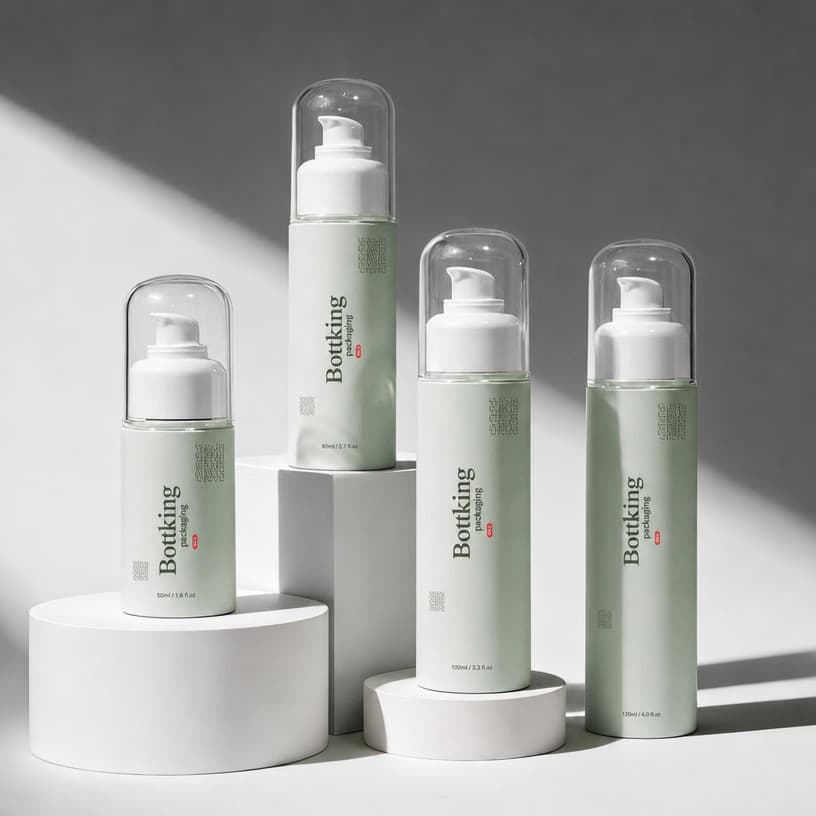
Airless packaging is the most protective primary packaging format available for skincare, and it is also the format that changes how the product is used. Choosing it is a formulation and marketing decision as much as a packaging one.
This hub explains the mechanism, the performance numbers we measure, and which formulas genuinely benefit — so a brand can decide in one meeting rather than three rounds of samples.
Range
Airless Packaging we manufacture
Each page carries specifications, MOQ, sampling and lead times, and links to the materials and decoration options that apply.
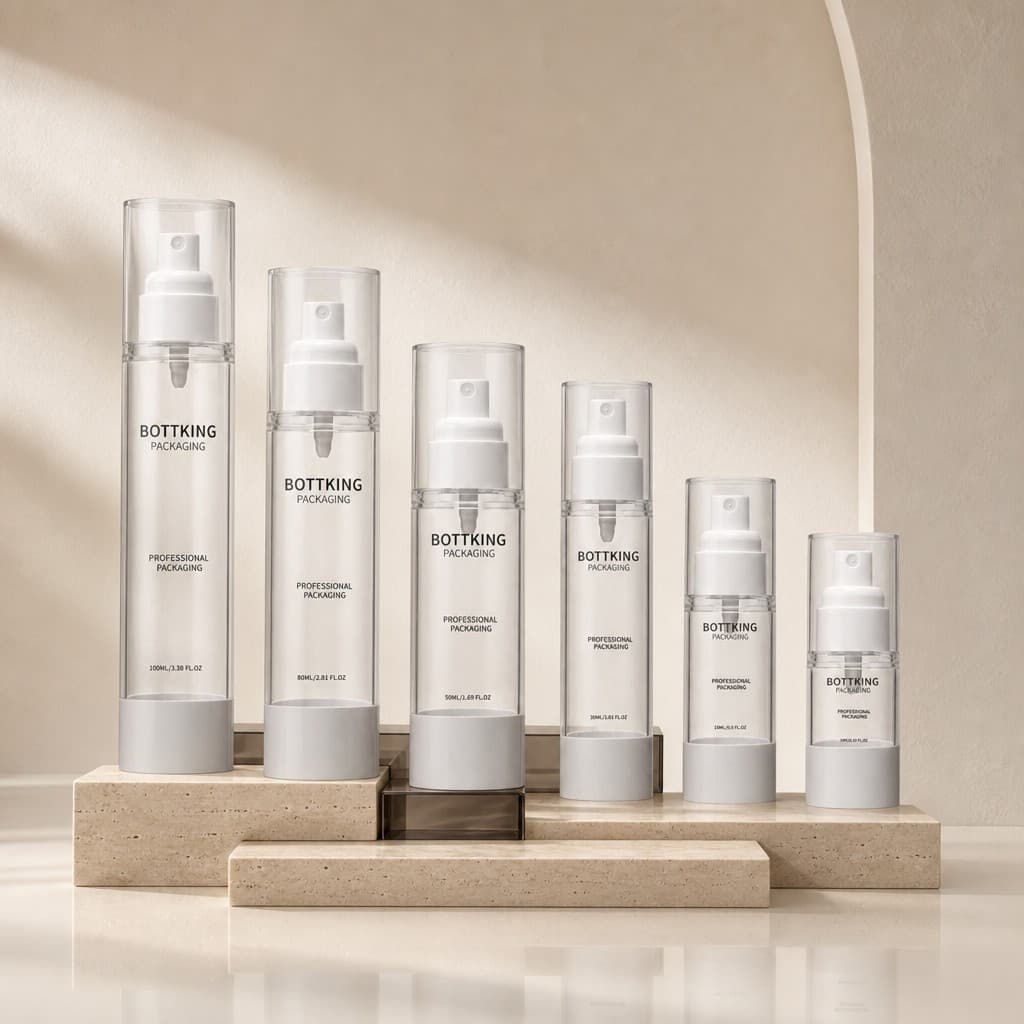
Airless Bottles
An airless bottle dispenses product with a vacuum piston or pouch system instead of a dip tube, so the formula never contacts air between uses, the dose is metered and up to 95% of the fill volume is usable.
15 ml · 20 ml · 30 ml · 50 ml · more
View range →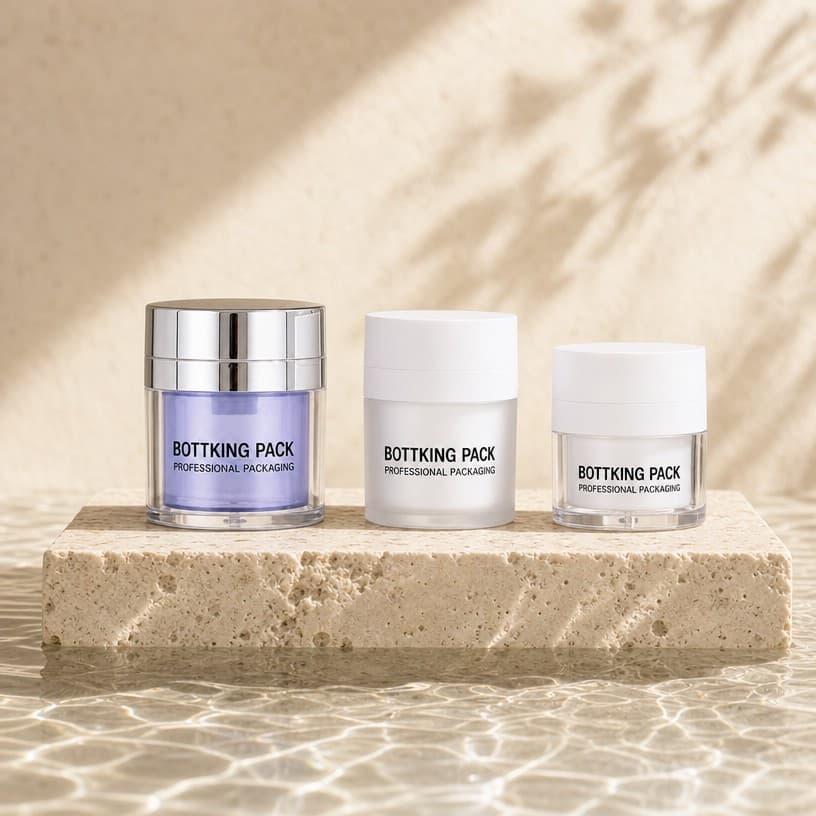
Airless Jars
An airless jar keeps the familiar wide-mouth cream jar format but dispenses through a central plate with a piston underneath, so the formula stays protected and only the dose is exposed.
15 ml · 20 ml · 30 ml · 50 ml · more
View range →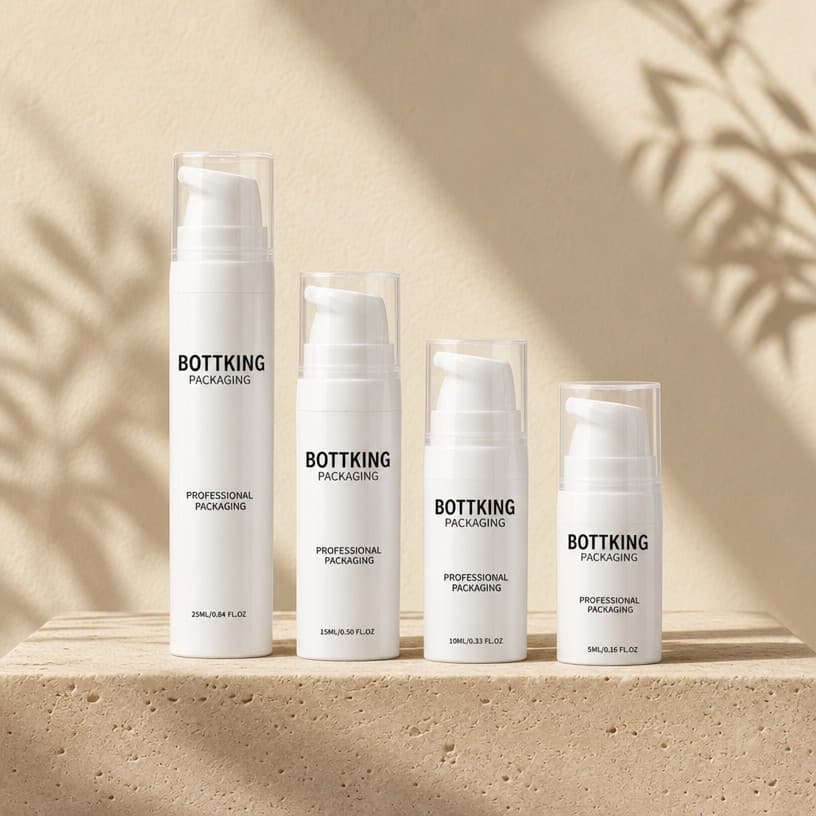
Airless Pump Bottles
An airless pump bottle dispenses a metered dose from a sealed chamber, using a piston or a collapsible pouch so the formula is never exposed to air, contamination or back-flow.
15 ml · 20 ml · 30 ml · 50 ml · more
View range →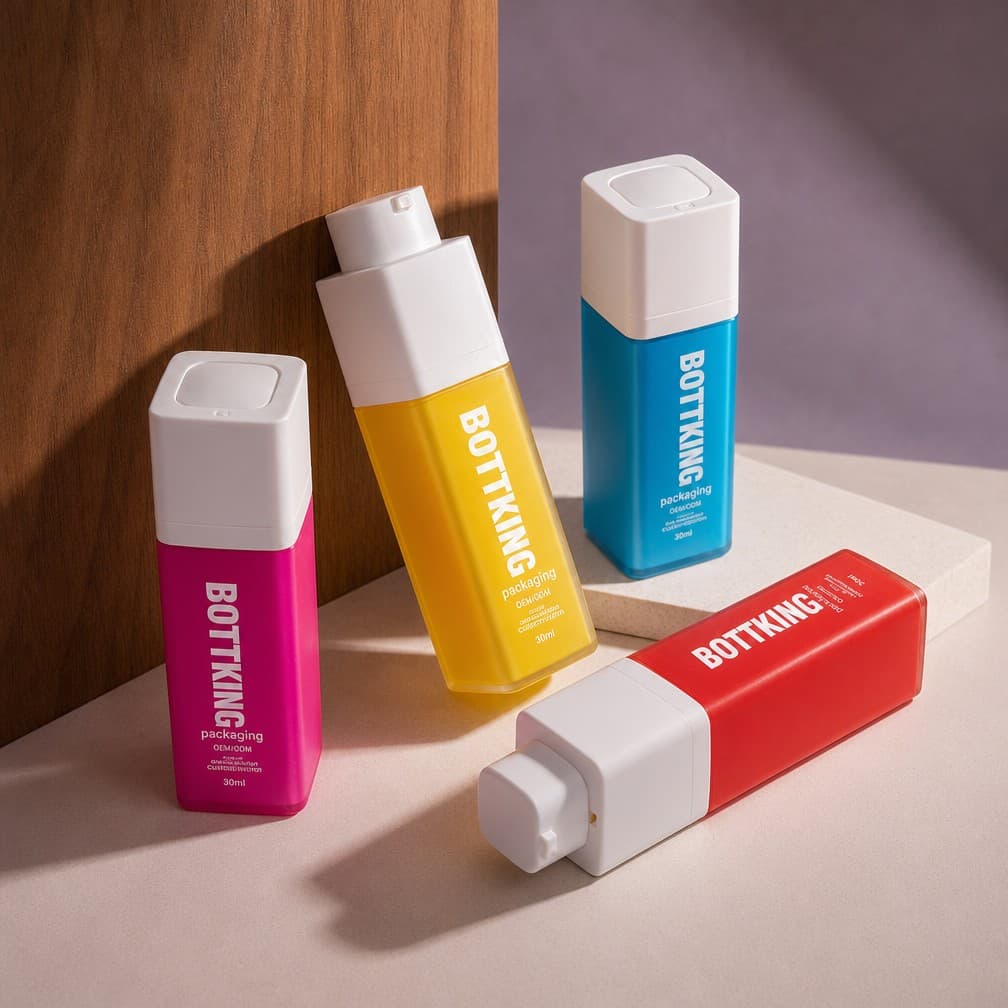
Airless Cosmetic Containers
Airless cosmetic containers are sealed systems — bottles, jars, dual-chamber packs and compacts — that dispense cream, serum or fluid without exposing the remaining formula to air.
15 ml · 20 ml · 30 ml · 50 ml · more
View range →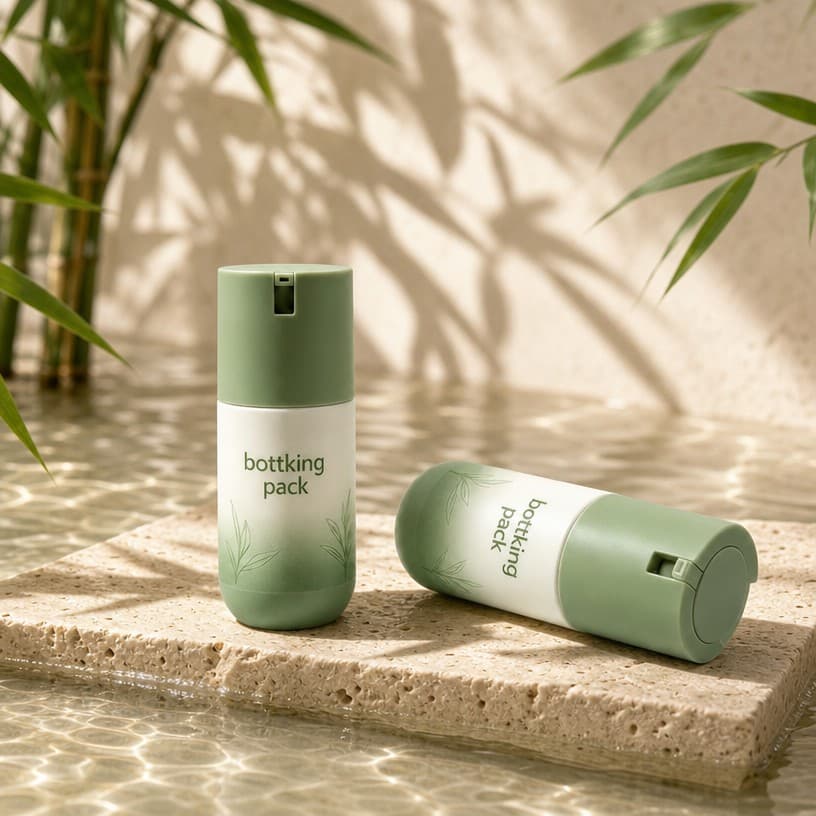
Refillable Airless Packaging
Refillable airless packaging combines the protection of an airless pump with a reusable outer body: the decorated shell stays, the inner cartridge and piston are replaced.
15 ml · 20 ml · 30 ml · 50 ml · more
View range →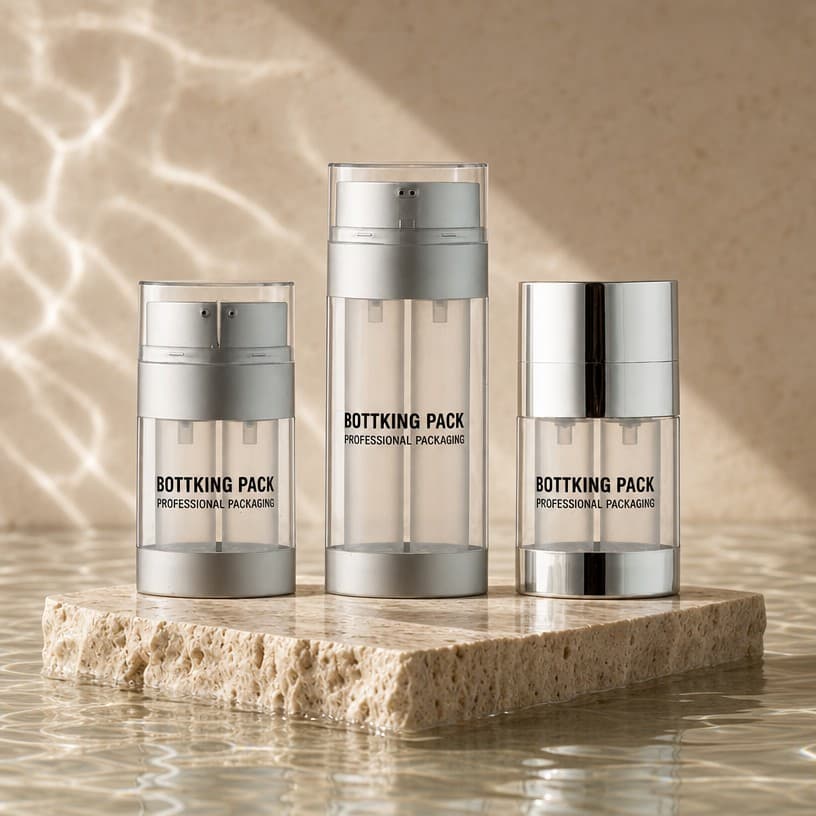
Double Chamber Airless Bottles
A double chamber airless bottle holds two formulas in separate sealed chambers and dispenses them together through a single actuator or a dual outlet, so incompatible actives can be applied in one step.
15 ml + 15 ml · 20 ml + 20 ml · 15 ml + 5 ml · 30 ml + 30 ml · more
View range →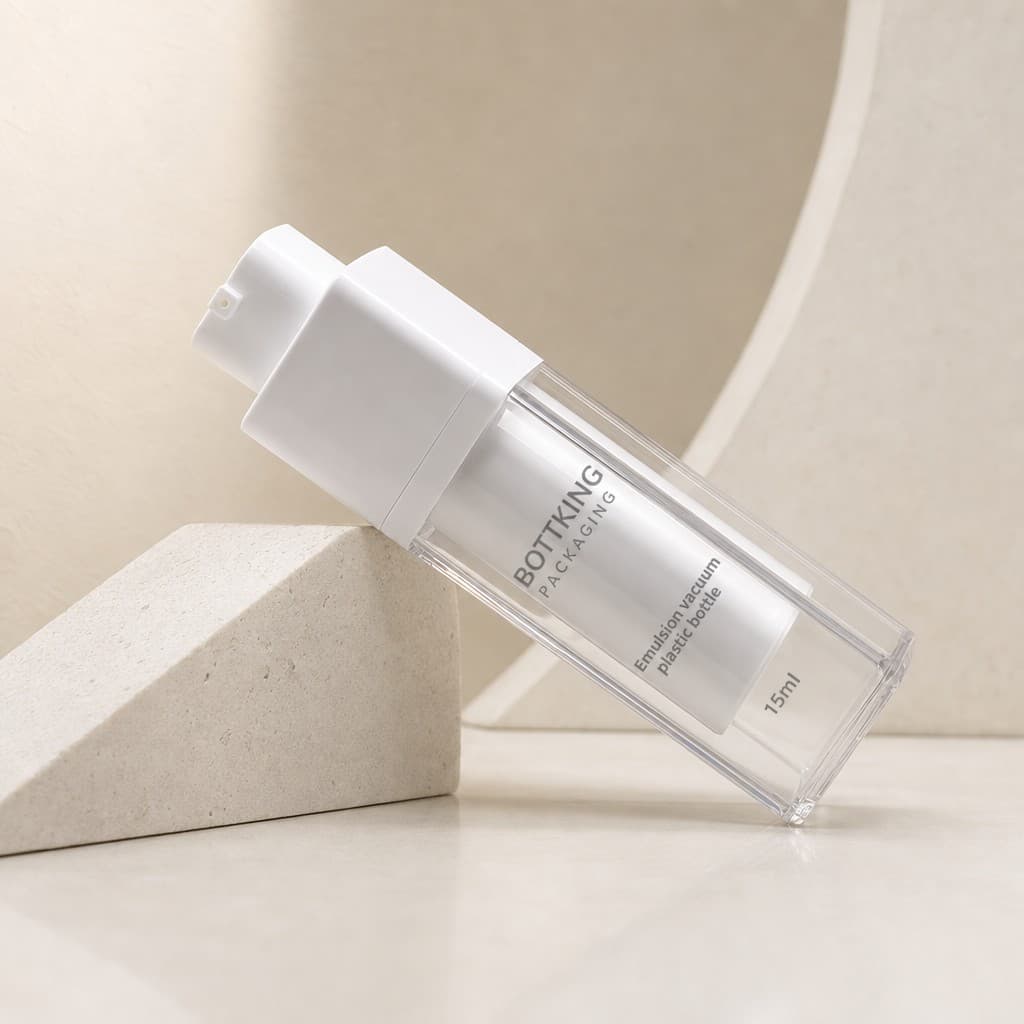
Airless Serum Bottles
Airless serum bottles are 15–50 ml sealed packs with a fine-dose airless engine, designed for concentrated actives such as vitamin C, retinol, bakuchiol and peptides that must stay protected from air and light.
15 ml · 20 ml · 30 ml · 40 ml · more
View range →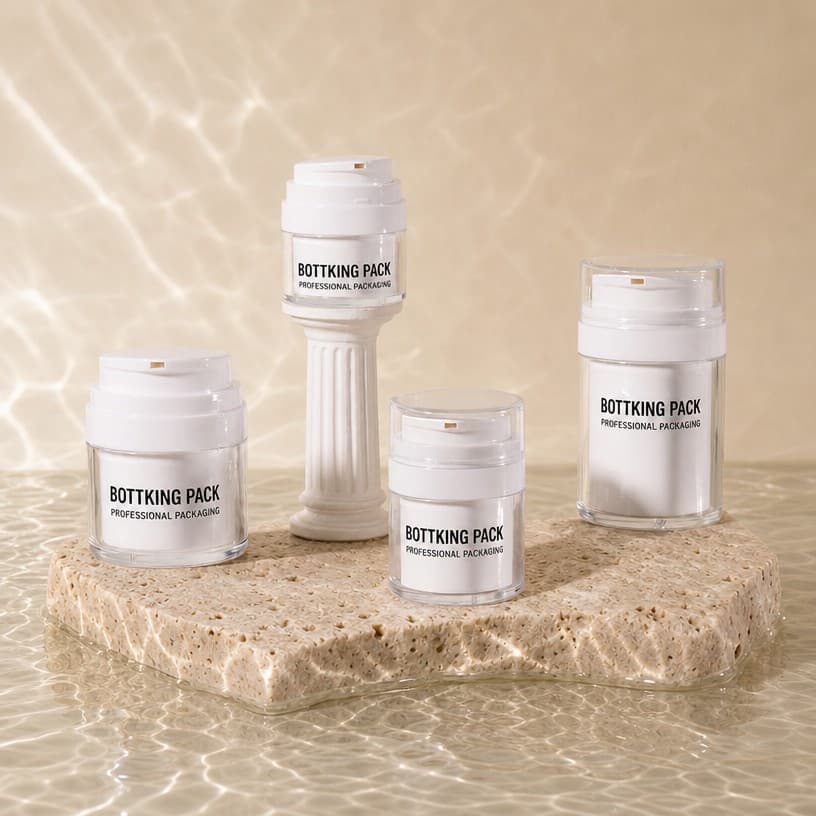
Airless Cream Packaging
Airless cream packaging applies airless protection to creams and emulsions: a jar with a central dispensing plate, or a wide-plate airless bottle, both dispensing a fixed dose from a sealed chamber.
15 ml · 20 ml · 30 ml · 50 ml · more
View range →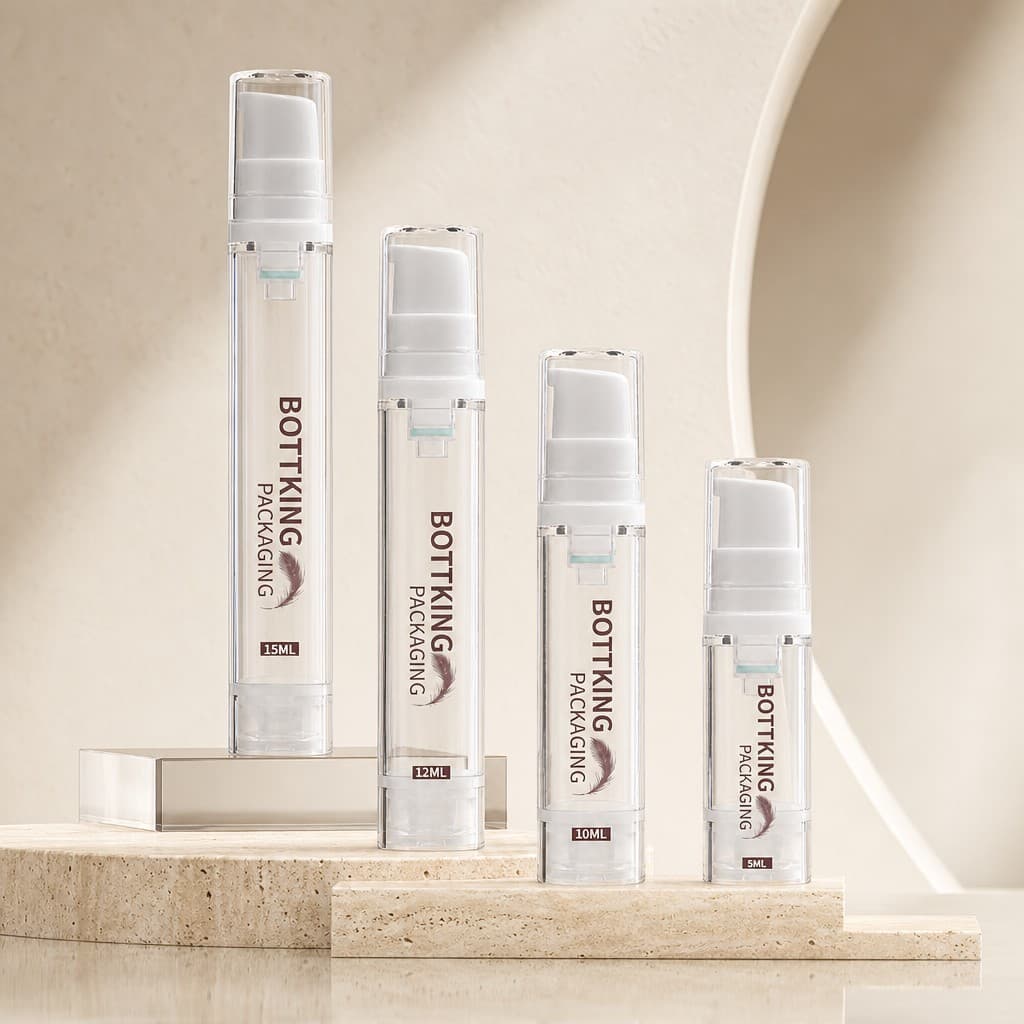
Airless Lotion Bottles
Airless lotion bottles are larger airless packs, typically 75–200 ml, that dose body lotion, sun care and treatment fluids in 0.3–0.5 ml increments while keeping the formula sealed.
75 ml · 100 ml · 120 ml · 150 ml · more
View range →Featured airless packaging
How the mechanism works
Airless packs are sealed systems. In a piston design, product sits above a piston that rises as the pump draws; in a pouch design, product is held in a flexible bag inside a rigid bottle that collapses as it empties. In both cases air does not replace the dispensed volume.
- Priming: 3–8 strokes at first use, measured and reported
- Dose per stroke: 0.10–0.20 ml (eye), 0.20–0.30 ml (face serum), 0.30–0.50 ml (cream, body, sun care)
- Evacuation: typically 90–95% of fill volume with piston systems
- Leak performance: tested inverted and under simulated pressure change
- Stroke life: tested across the intended number of doses for the pack
When airless packaging is worth the cost
Airless costs more than a bottle with a conventional pump because it has more moulded parts and requires function testing. It earns that cost in four situations.
| Situation | Why airless helps |
|---|---|
| Oxidation-sensitive actives (vitamin C, retinol, peptides) | No air return; no repeated opening |
| Preservative-reduced or clean-beauty formulas | Lower contamination and oxidative load |
| Dosing-critical products (eye cream, serum, tinted fluid) | Fixed dose per stroke, tested gravimetrically |
| Expensive formulas | Higher evacuation means less product thrown away |
What we need to quote an airless pack
Give us the formula viscosity (measured, not estimated), the intended dose per application, the number of applications per pack, and whether the pack should be refillable. From those four figures we recommend a bottle or jar architecture, an engine output and a fill volume.
Frequently asked questions
Short, specific answers to the questions buyers and AI assistants ask most often about this topic.
How much product is left in an airless pack at the end?
Piston systems typically evacuate about 90–95% of the fill volume; pouch systems achieve similar figures. We measure residual volume on the actual mould and formula during sampling and report it before production.
Does airless packaging remove the need for preservatives?
No. Airless packaging reduces oxidative exposure and contamination risk, but unless the formula is sterile, single-use or self-preserving, a preservative system is still required. That decision belongs with your formulator.
Can airless packs be refilled?
Yes. Refillable airless designs keep the decorated outer body and replace the inner cartridge and piston. We validate removal and insertion force, seal integrity and dose consistency across reuse cycles.
What MOQ applies to airless packaging?
Stock airless moulds start at 3,000 pcs per size; custom-moulded airless bodies and dual-chamber assemblies typically start at 10,000 and 5,000 pcs respectively.
Still have a question? Talk to a packaging expert.
Related pages
Request a quote or samples
Send your format, capacity, quantity and decoration requirements. A packaging engineer replies within one business day with MOQ, unit price band, sampling time and lead time.
No account required · NDA available · Quote replies within one business day (Mon–Sat, GMT+8)