Material guide
PCR plastic Cosmetic Packaging
Post-consumer recycled plastic (rPET, rPP, rHDPE)
PCR plastic is packaging resin made from post-consumer recycled material. It lets a brand reduce virgin plastic per pack, with the recycled percentage verified against the resin grade rather than claimed generically.
At a glance
- Best for
- HDPE bottles · PP cosmetic jars · Cleanser packaging
- Applications
- HDPE cleanser, shampoo and body wash bottles (25–100% PCR) · PP cream jars, lids and closures (30–100% PCR) · PET and rPET lotion and toner bottles (30–100% PCR)
- Key advantage
- Reduces virgin plastic demand per pack — a measurable, verifiable change · Works with existing moulds in most cases, so no new tooling is required
- Decoration
- All standard decoration applies: printing, hot stamping, coating, labelling · Darker and coloured base resin masks colour variation better than white
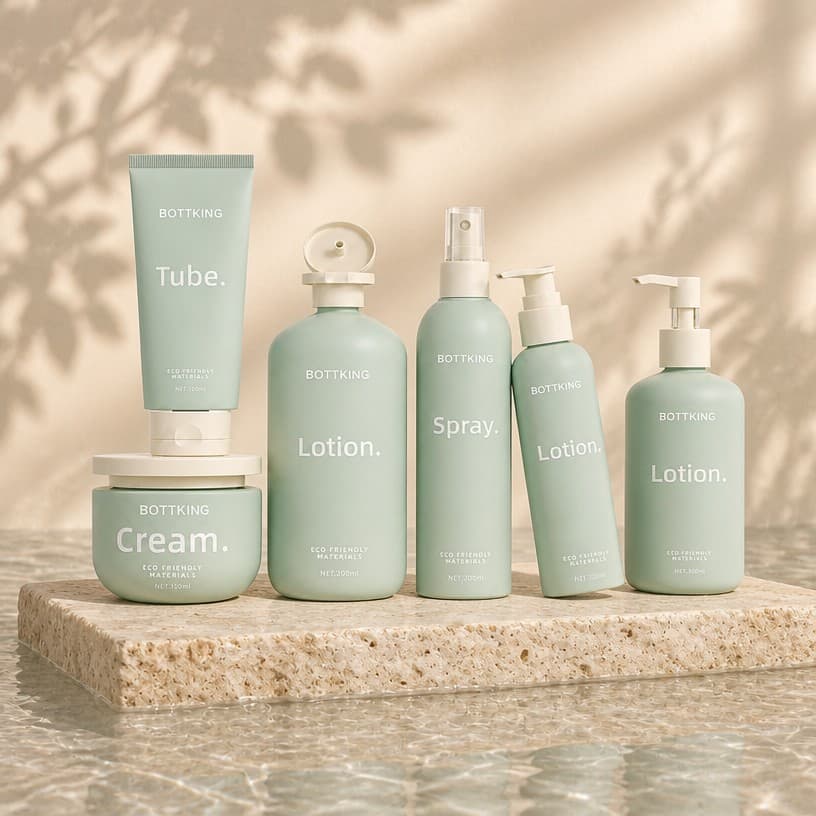
What is PCR plastic used for in cosmetics?
PCR is a claim about material origin, not about performance. rPET, rPP and rHDPE are functionally similar to virgin resin, and the practical differences show up as colour consistency, odour in some grades, and the documentation available for the specific grade used.
The right way to present PCR packaging is specific: state the recycled percentage, the polymer, and the certificate that verifies it — for example '50% post-consumer recycled HDPE, certified grade, certificate available on request'.
| Property | Value |
|---|---|
| Polymer options | rPET, rPP, rHDPE (and rLDPE for some components) |
| Typical recycled content | 25–100% post-consumer for HDPE and PET; 30–100% for PP |
| Processing | Same moulding processes as virgin resin; parameters adjusted |
| Colour consistency | Reduced at high percentages; sample approval required |
| Odour | Can be noticeable in some recycled grades; grade selection matters |
| Documentation | Available for certified grades (percentage and source) |
| Compatibility | Equivalent to virgin resin of the same polymer type |
Material characteristics
- Identical polymer type to virgin (rPET is still PET, rHDPE is still HDPE)
- Requires slightly different moulding parameters, especially at higher percentages
- Can show slight colour shift — typically a warmer or greyer tone
- Food-contact and cosmetic-contact grades are available with documentation
- Mono-material design with PCR components keeps a single recycling stream
- Certified grades provide auditable recycled-content evidence
Applications
- HDPE cleanser, shampoo and body wash bottles (25–100% PCR)
- PP cream jars, lids and closures (30–100% PCR)
- PET and rPET lotion and toner bottles (30–100% PCR)
- Refill bottles and refill pods where recycled content compounds reuse benefits
- Secondary components such as caps, discs and overcaps
- Any opaque format where a slight colour shift is acceptable
Advantages
- Reduces virgin plastic demand per pack — a measurable, verifiable change
- Works with existing moulds in most cases, so no new tooling is required
- Supported by certificates on certified grades, which makes claims defensible
- Commercially available in the polymers that dominate cosmetic packaging
- Improves sustainability reporting because recycled content is quantifiable per unit
- Often requested by retail partners as a condition of listing
Limitations to plan for
- Colour matching is harder than with virgin resin — extreme white and bright colours are difficult at high percentages
- Some grades carry odour, which matters for unscented products
- Higher percentages may reduce impact performance slightly in thin walls
- Premium transparent finishes (glass-clear PET) are harder to achieve at high recycled content
- Availability and price fluctuate with the recycled resin market
- Certified documentation may not exist for every grade or colour
Formula compatibility
- Equivalent to virgin resin of the same polymer — compatibility testing follows the same rules
- Opaque HDPE and coloured PP hide recycled-tone variation best
- Clear rPET may appear slightly grey; compare against a physical sample
- Unscented formulas should be evaluated with an odour panel on the finished pack
- High recycled percentages in thin walls should be load-tested for stacking
- Certified grades may limit available colours, which should be confirmed before design freeze
Sustainability and end of life
- Recycled content is quantifiable: state the polymer and percentage, and keep the certificate on file
- PCR reduces demand for virgin fossil-based resin per pack — the benefit scales with volume
- Recycled content and recyclability are separate claims; a PCR pack is not automatically recyclable
- Combining PCR with mono-material design supports both recycled input and sortability
- Light colours and natural tones sort better than black and dark colours in sorting facilities
- Where a grade is uncertified, describe the input source instead of quoting an unverified percentage
Decoration options
- All standard decoration applies: printing, hot stamping, coating, labelling
- Darker and coloured base resin masks colour variation better than white
- Spray coating can unify the surface tone across recycled batches
- Direct printing is preferable to full-wrap sleeves where recyclability matters
- Moulded-in texture can visually mask flow variation
- Colour approval should be against a physical PCR sample, not a Pantone chip alone
Suitable skincare products
- HDPE bottles
- PP cosmetic jars
- Cleanser packaging
- Body care packaging
- Refillable airless packaging
- Shampoo bottles
Why a brand should choose PCR plastic
- Choose PCR when you need a quantifiable recycled-content reduction in virgin plastic use
- Choose PCR when a retail partner or regulation requires recycled content in packaging
- Choose PCR with mono-material design when both recycled input and recyclability are goals
- Choose virgin resin only where optical clarity or exact colour cannot tolerate recycled-tone variation
Frequently asked questions
What does PCR mean in packaging?
PCR stands for post-consumer recycled: resin made from plastic that has been used and collected from households or businesses, then reprocessed. It is distinct from PIR (post-industrial) material, which is production scrap that never reached a consumer.
What recycled percentage can you supply?
rHDPE and rPET are available from 25% to 100% post-consumer content, and rPP from 30% to 100%, depending on grade, colour and availability. We quote the percentage the selected grade actually carries and provide the certificate where the grade is certified.
Does PCR plastic change the look of my packaging?
At higher percentages it can: colour tends to shift slightly warmer or greyer and is harder to hold to a tight tolerance. Opaque or coloured packs hide this best; for white or clear packs we supply samples for physical approval before production.
Is PCR packaging more expensive?
Often yes, particularly for food-grade and cosmetic-grade recycled resin, because demand and certification add cost. The premium varies by polymer and market, and we quote both virgin and PCR options so the difference is visible per unit.
Can PCR packaging be recyclable as well?
Yes if the design is mono-material: for example a 100% PCR HDPE bottle with an HDPE cap is both recycled content and a single-stream pack. Recycled content and recyclability are two different claims and should be stated separately.
Still have a question? Talk to a packaging expert.
Continue researching
PCR plastic packaging quotes and samples
Tell us the format, capacity, quantity and any recycled-content target and we will confirm which PCR plastic grade fits your formula, plus MOQ, sampling and lead time.
No account required · NDA available · Quote replies within one business day (Mon–Sat, GMT+8)