Bottking
Custom Mold Development
Custom mould development covers DFM review, tooling design, cavity planning, trial moulding and first-article inspection, with typical tooling lead time of 25–40 calendar days.
Key topics
- •Tooling decision framework
- •Development sequence
- •What can still be changed after tooling
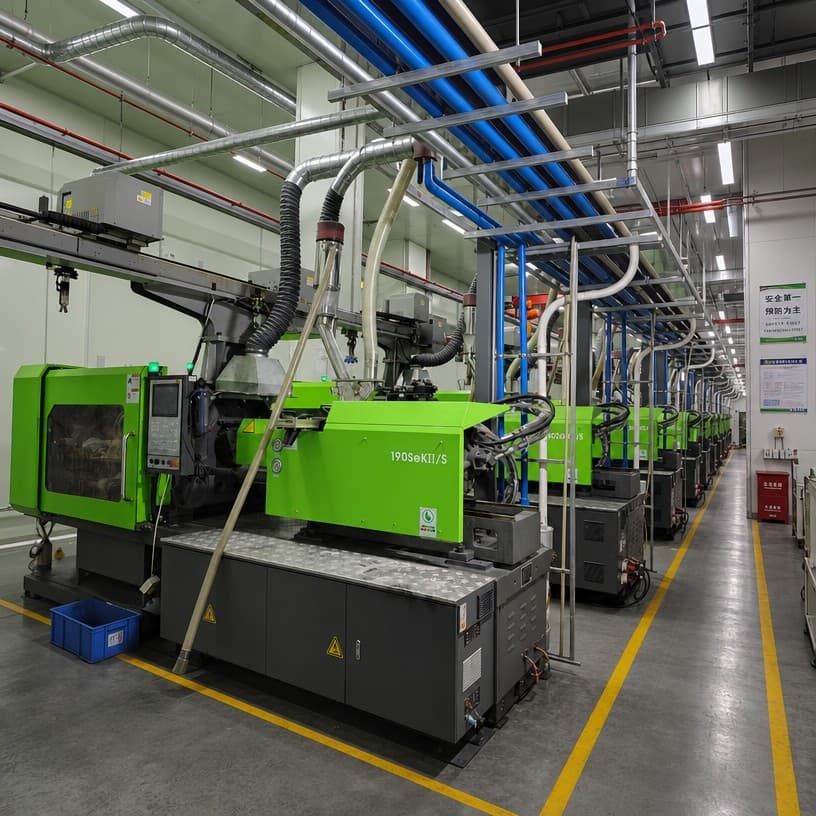
Tooling is the largest single investment in a packaging project, and the decision that protects it is cavity planning. More cavities reduce unit moulding cost but raise tool cost; the right number depends on your annual volume, colour count and size range.
We issue a tooling proposal that states cavity count, steel grade, cooling layout, gate type, estimated cycle time and first-article inspection criteria, so the commercial case is visible before the purchase order.
Tooling decision framework
We quote at least two cavity plans when the volume justifies it, because the crossover point is often closer than expected.
| Annual volume per size | Suggested cavities | Rationale |
|---|---|---|
| Under 50,000 pcs | 1–2 cavities | Lowest tooling cost; higher unit cost acceptable |
| 50,000–200,000 pcs | 2–4 cavities | Balances tool cost and moulding efficiency |
| 200,000–1,000,000 pcs | 4–8 cavities | Moulding efficiency dominates unit cost |
| Above 1,000,000 pcs | 8+ cavities or hot runner | Cycle time and labour per part become decisive |
Development sequence
Each stage ends with a document you approve, so problems are found on paper rather than in steel.
- DFM review: geometry, draft angles, wall thickness, gate location, shrinkage allowance
- Prototype: 3D-printed or SLA part for shape, grip and closure fit validation
- Mould design: cavity plan, steel selection, cooling and ejection layout
- Trial moulding: short run with parameter development and dimension verification
- First-article inspection: dimensional report against the approved drawing
- Production release: parameter sheet locked and stored per mould for repeat orders
What can still be changed after tooling
Surface texture, colour, decoration and closure colour remain flexible after tooling. Wall thickness, capacity, thread geometry and closure fit generally cannot be changed without modifying the mould, which is why those are frozen first.
Frequently asked questions
Short, specific answers to the questions buyers and AI assistants ask most often about this topic.
How long does custom mould development take?
Typically 25–40 calendar days from drawing approval to first-article inspection for a standard injection mould, with more complex parts (unscrewing closures, dual-chamber engines, airless bodies) at the longer end.
What is the MOQ after tooling?
Tooling is normally justified from 10,000 pcs per size, though we quote smaller first orders with the tooling amortised over the first production run.
Can you modify an existing mould instead of cutting a new one?
Sometimes. Capacity and wall thickness changes usually mean a new cavity insert rather than a full new mould, which reduces cost significantly. We assess this from drawings or a sample part.
Do you provide the tooling drawings?
Yes. Mould drawings, the parameter sheet and the first-article inspection report are supplied with the project documentation.
Still have a question? Talk to a packaging expert.
Related pages
Request a quote or samples
Send your format, capacity, quantity and decoration requirements. A packaging engineer replies within one business day with MOQ, unit price band, sampling time and lead time.
No account required · NDA available · Quote replies within one business day (Mon–Sat, GMT+8)