Material guide
Bio-based plastic Cosmetic Packaging
Bio-based plastics (bio-PE, bio-PET, PLA and PEF)
Bio-based plastics are made from renewable feedstocks such as sugarcane or corn. Bio-PE and bio-PET are drop-in replacements for conventional PE and PET; biodegradability is a separate property that most bio-based packaging does not have.
At a glance
- Best for
- HDPE bottles · Plastic tubes · Caps & closures
- Applications
- HDPE-style bottles for cleanser, shampoo and body care (bio-PE) · Squeeze tubes and closures using bio-based PE grades · Bio-based PET bottles and jars for selected markets
- Key advantage
- Reduces reliance on fossil-derived feedstock for the same packaging function · Drop-in grades avoid new moulds, decoration changes or quality re-qualification
- Decoration
- Standard printing, hot stamping, coating and labelling · Natural or undyed finishes can be used to signal renewable feedstock
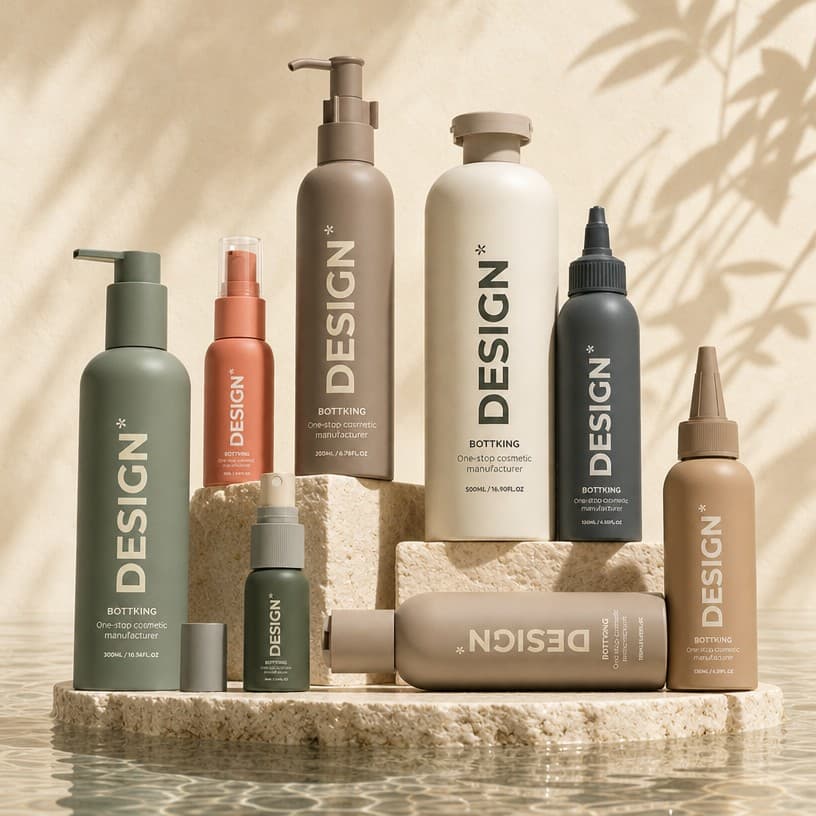
What is Bio-based plastic used for in cosmetics?
Bio-based means the carbon in the plastic came from a plant rather than from fossil feedstock. It does not mean the plastic will biodegrade, and it does not necessarily reduce weight, energy use or waste — so the claim must be written precisely.
For cosmetic packaging the practical options are drop-in grades: bio-PE (from sugarcane ethanol) behaves like conventional PE and can be moulded into bottles and tubes on existing tools, and bio-based PET (bio-MEG or bio-PEF in development) covers bottle formats.
| Property | Value |
|---|---|
| Feedstock | Sugarcane, corn, and other renewable biomass |
| Drop-in grades | Bio-PE (bottles, tubes, caps), bio-PET (bottles) |
| Non-drop-in grades | PLA, PHA — different processing, lower heat tolerance |
| Bio-based content | Specified per grade and verified by mass-balance or content certification |
| Performance | Bio-PE equivalent to conventional PE; PLA limited in heat resistance and barrier |
| End of life | Bio-based plastic is generally not biodegradable in a home or landfill setting |
| Cost | Usually at a premium to conventional resin; availability varies by grade |
Material characteristics
- Derived from renewable rather than fossil feedstock
- Bio-PE can be moulded on existing equipment with minimal parameter changes
- Bio-based content is quantifiable and certifiable depending on the scheme used
- Visual and mechanical properties are largely equivalent to conventional counterparts in drop-in grades
- PLA and PHA require different processing and have lower heat tolerance
- End-of-life behaviour depends on the polymer, not on the feedstock
Applications
- HDPE-style bottles for cleanser, shampoo and body care (bio-PE)
- Squeeze tubes and closures using bio-based PE grades
- Bio-based PET bottles and jars for selected markets
- Caps, discs and small components
- Promotional and limited-edition packaging where a material story adds value
- Combined bio-based and PCR constructions in multi-layer bottles
Advantages
- Reduces reliance on fossil-derived feedstock for the same packaging function
- Drop-in grades avoid new moulds, decoration changes or quality re-qualification
- Supports brand stories based on renewable materials rather than vague eco language
- Bio-PE is compatible with PCR blending for brands combining both strategies
- Can be certified for bio-based content with a documented percentage
- Suitable for the same formats as conventional PE: bottles, tubes, caps
Limitations to plan for
- Generally more expensive than conventional and recycled grades
- Not biodegradable — the word 'bio-based' is frequently misread by consumers
- Feedstock sustainability varies with certification and sourcing, which should be stated
- Availability and lead times can be longer than for standard resin
- PLA and PHA cannot be used interchangeably with PE or PP tooling and processes
- Land-use and food-versus-material questions can attract scrutiny, so claims must be precise
Formula compatibility
- Bio-PE behaves like conventional PE, so compatibility rules are the same
- PLA is unsuitable for hot filling and has poor barrier to water vapour
- Fragrance and essential-oil loads follow the same soak-test requirement as PE
- Colour matching may need adjustment as bio-based masterbatch options are narrower
- Decoration processes are unchanged for drop-in grades
- Multi-layer constructions can place bio-based resin in the outer layer while the inner contact layer stays conventional
Sustainability and end of life
- Describe bio-based content precisely: feedstock, percentage and certification scheme
- Do not imply biodegradability unless the specific grade is certified compostable or biodegradable
- Combine bio-based content with mono-material design so the pack still sorts correctly
- Consider recycled content when the priority is circularity rather than renewable feedstock
- Ask for the mass-balance or content certificate for the actual grade used
- Weigh the freight impact: bio-based resin shipped internationally carries the same logistics footprint as conventional resin
Decoration options
- Standard printing, hot stamping, coating and labelling
- Natural or undyed finishes can be used to signal renewable feedstock
- Spray coating equalises surface tone where bio-based colour variation appears
- Moulded texture can reinforce a natural aesthetic without additional material
- Keep decoration separable to protect sorting and recycling outcomes
- Colour development should start from a physical bio-based sample
Suitable skincare products
- HDPE bottles
- Plastic tubes
- Caps & closures
- Body care packaging
- Travel cosmetic bottles
Why a brand should choose Bio-based plastic
- Choose bio-based plastic when renewable feedstock is a brand priority and drop-in performance is required
- Choose bio-PE when you want a bio-based story without changing moulds or decoration
- Choose recycled content instead when circularity and verified recycled percentages matter more
- Avoid bio-based claims in markets where the feedstock certification cannot be evidenced
Frequently asked questions
Is bio-based plastic biodegradable?
Usually not. Bio-PE is chemically identical to conventional PE and does not biodegrade in normal conditions. PLA and some PHA grades are industrially compostable, which is a different property and requires specific certification. Always describe the actual grade.
What bio-based options are practical for cosmetic packaging?
Bio-PE is the most practical: it is a drop-in replacement for conventional PE and can be moulded into bottles, tubes and caps with the same tooling. Bio-based PET is available for bottle formats, and PLA is limited by heat tolerance and barrier performance.
How is bio-based content verified?
Through content or mass-balance certification from an accredited scheme, plus supplier declarations for the specific grade and batch. We supply the documentation for the resin actually used in your order rather than a generic brochure.
Is bio-based plastic more expensive?
Generally yes, typically above conventional resin and often above recycled grades. We quote bio-based and recycled options in parallel so the cost difference per unit is explicit before you decide.
Can bio-based and recycled plastic be combined?
Yes. Multi-layer constructions or blended grades can combine bio-based outer layers with recycled inner layers, though documentation then needs to cover both content types separately.
Still have a question? Talk to a packaging expert.
Continue researching
Bio-based plastic packaging quotes and samples
Tell us the format, capacity, quantity and any recycled-content target and we will confirm which Bio-based plastic grade fits your formula, plus MOQ, sampling and lead time.
No account required · NDA available · Quote replies within one business day (Mon–Sat, GMT+8)