Material guide
Recycled plastic Cosmetic Packaging
Recycled plastic (post-consumer and post-industrial)
Recycled plastic covers post-consumer recycled (PCR) and post-industrial recycled (PIR) resin. Both reduce virgin material use, but only post-consumer content supports a circularity claim, so the distinction must be stated precisely.
At a glance
- Best for
- HDPE bottles · PP cosmetic jars · Plastic tubes
- Applications
- Shampoo, body wash and cleanser bottles in PCR HDPE · Cream jars and lids in PCR PP · Lotion and toner bottles in rPET
- Key advantage
- Reduces virgin plastic per pack in a way that can be reported and audited · Available across the polymers used for cosmetic bottles and jars
- Decoration
- Printing, hot stamping, coating and labelling all apply · Coloured and textured surfaces mask recycled-tone variation
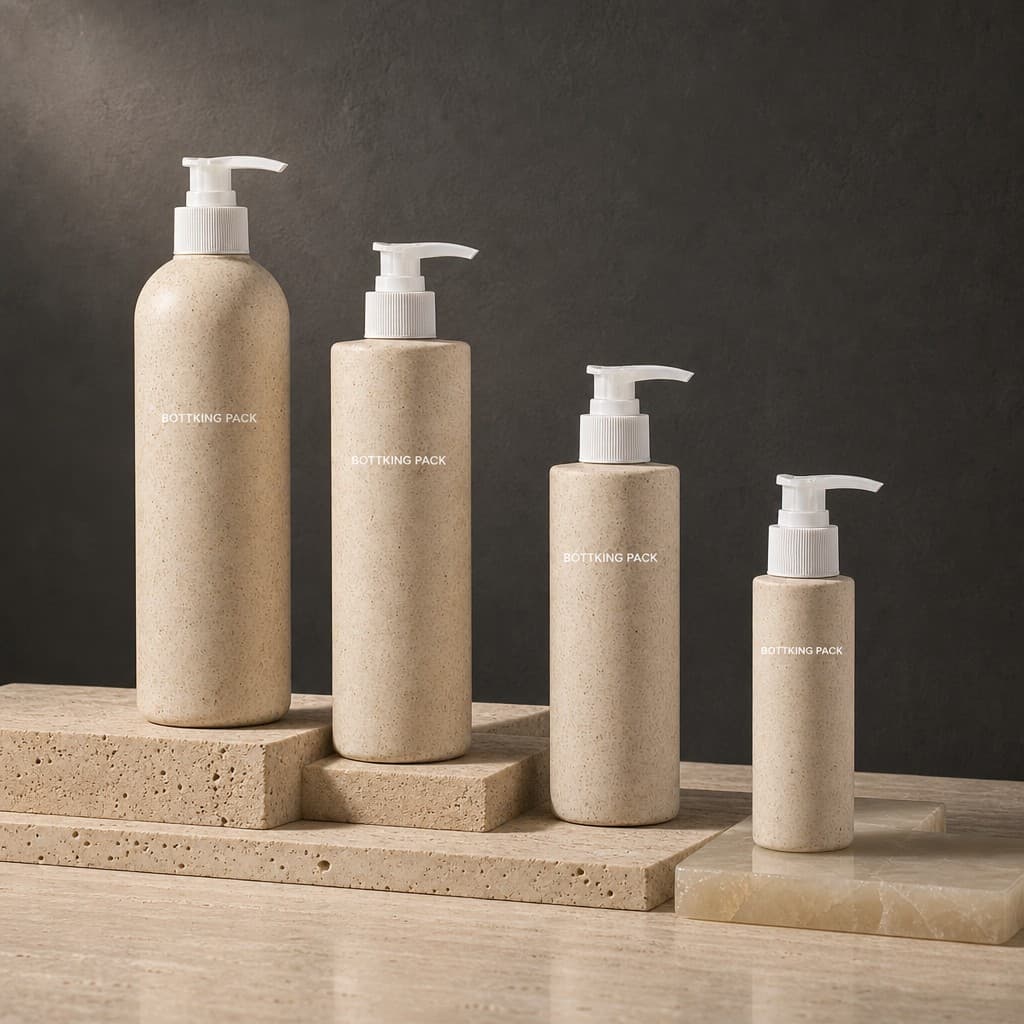
What is Recycled plastic used for in cosmetics?
Two recycled streams supply cosmetic packaging. Post-consumer recycled (PCR) resin comes from collected household and commercial plastic waste. Post-industrial recycled (PIR) resin comes from manufacturing scrap that never reached a consumer — it is easier to reprocess and usually cleaner, but it does not demonstrate circularity in the same way.
Regulators and retail partners increasingly ask for the specific figure, the stream and the verification method. This page explains what is realistic for each polymer and how to word claims that will survive procurement review.
| Property | Value |
|---|---|
| Streams | Post-consumer (PCR) and post-industrial (PIR) |
| Available polymers | rPET, rHDPE, rPP, rLDPE |
| Typical PCR percentages | 25–100% for PE and PET; 30–100% for PP |
| Typical PIR percentages | Often 30–70%, blended with virgin resin |
| Verification | Certificates (e.g. recycled-content certification), supplier declarations, batch records |
| Processing impact | Moulding parameters adjusted; mechanical properties largely retained |
| Packaging formats | Bottles, jars, closures, tubes, refill components |
Material characteristics
- Polymer identity is unchanged — recycled HDPE behaves like HDPE
- Colour and odour are the main perceptible differences
- Certified grades carry documented percentages and chain-of-custody records
- Blends of PCR and virgin resin give intermediate colour and mechanical performance
- Requires sample-based colour approval rather than a Pantone match alone
- Works with the same decoration processes as virgin resin
Applications
- Shampoo, body wash and cleanser bottles in PCR HDPE
- Cream jars and lids in PCR PP
- Lotion and toner bottles in rPET
- Tube bodies and caps in PCR-PE
- Refill bottles, pods and cartridges
- Secondary components such as caps, discs and overcaps
Advantages
- Reduces virgin plastic per pack in a way that can be reported and audited
- Available across the polymers used for cosmetic bottles and jars
- Supports retail and regulatory recycled-content targets
- Improves recyclability outcomes when combined with mono-material design
- Can lower cost relative to certified virgin grades in some markets
- Communicates a concrete action rather than a general sustainability statement
Limitations to plan for
- Recycled content and recyclability are different claims and are often confused
- Colour tolerance is tighter to hold, especially in white and bright shades
- Some grades carry odour that is unacceptable for unscented products
- Certified availability is limited for niche colours and specialty grades
- Price and lead time depend on the recycled resin market
- PIR content cannot support a circularity claim in most frameworks
Formula compatibility
- Same compatibility rules as the equivalent virgin polymer
- Odour-sensitive formulas need a panel test on the finished pack
- Unscented, clear or white products are the most sensitive to recycled-tone variation
- High recycled content in thin walls should be stacking and drop tested
- Decoration choice can help unify tone across batches; spray coating is effective
- Certified colour ranges should be reviewed before the design is locked
Sustainability and end of life
- State the stream (post-consumer or post-industrial), the polymer and the percentage
- Keep the certificate on file and make it available during qualification
- Combine recycled content with mono-material packaging to support recyclability
- Prefer light colour resin where collection and optical sorting matter
- Consider reuse: refill formats multiply the benefit of recycled material across uses
- Avoid unqualified claims such as '100% eco-friendly'; describe what the pack actually is
Decoration options
- Printing, hot stamping, coating and labelling all apply
- Coloured and textured surfaces mask recycled-tone variation
- Direct print is preferable to full-wrap sleeves where recyclability is claimed
- Moulded finishes (matte, soft-touch, pearl) can be specified to unify appearance
- Colour approval must be against a production-resin sample
- Avoid mirror-chrome finishes if you intend to claim sortability improvements
Suitable skincare products
- HDPE bottles
- PP cosmetic jars
- Plastic tubes
- Refillable cosmetic jars
- Body care packaging
Why a brand should choose Recycled plastic
- Choose recycled plastic when recycled content is a defined packaging KPI for the brand
- Choose PCR specifically when the claim must demonstrate circularity
- Choose recycled grades for opaque, coloured or textured packs where tone variation is manageable
- Keep virgin resin where optical clarity or exact colour is a hard requirement
Frequently asked questions
What is the difference between PCR and recycled plastic?
Recycled plastic is the umbrella term. PCR (post-consumer recycled) is plastic recovered after consumer use, which supports circularity claims. PIR (post-industrial recycled) is factory scrap reused before reaching a consumer.
How do I verify recycled content in packaging?
Ask for the recycled-content certificate for the resin grade used, the supplier declaration and the batch record for your production lot. If the grade is not certified, describe the input source and avoid quoting a specific percentage.
Can recycled plastic packaging be recycled again?
Yes — recycled plastic is the same polymer, so it can re-enter the recycling stream if the pack is separated and sorted. That depends on pack design: mono-material constructions with removable labels sort far better than multi-material assemblies.
Which formats are best for recycled content?
Opaque HDPE bottles, PP jars and PE tubes are the best fit because colour variation is easy to hide and recycled grades are widely available. Clear rPET bottles or jars are workable but more sensitive to a grey or warm tint.
Does recycled plastic cost more than virgin plastic?
It varies. Recycled HDPE and PET are often close to virgin pricing with periods of premium, while certified cosmetic-grade rPP or specialty colours can carry a clear premium. We quote both options so the difference is visible.
Still have a question? Talk to a packaging expert.
Continue researching
Recycled plastic packaging quotes and samples
Tell us the format, capacity, quantity and any recycled-content target and we will confirm which Recycled plastic grade fits your formula, plus MOQ, sampling and lead time.
No account required · NDA available · Quote replies within one business day (Mon–Sat, GMT+8)