Material guide
HDPE Cosmetic Packaging
High-density polyethylene
HDPE is an opaque, tough, chemically resistant polyethylene that is the most cost-effective cosmetic plastic above 250 ml and the most widely available recycled-content resin.
At a glance
- Best for
- HDPE bottles · Shampoo bottles · Cleanser bottles
- Applications
- Cleanser, body wash and shampoo bottles (200–1,000 ml) · Body lotion bottles with pumps (250–500 ml) · Large-format refill bottles and concentrate packs
- Key advantage
- Lowest cost per unit of the common cosmetic plastics at medium and large volumes · Blocks light — no UV exposure for the formula and no transparency constraints on colour
- Decoration
- Custom colour across the full Pantone range (opaque) · Screen printing with surface treatment where required
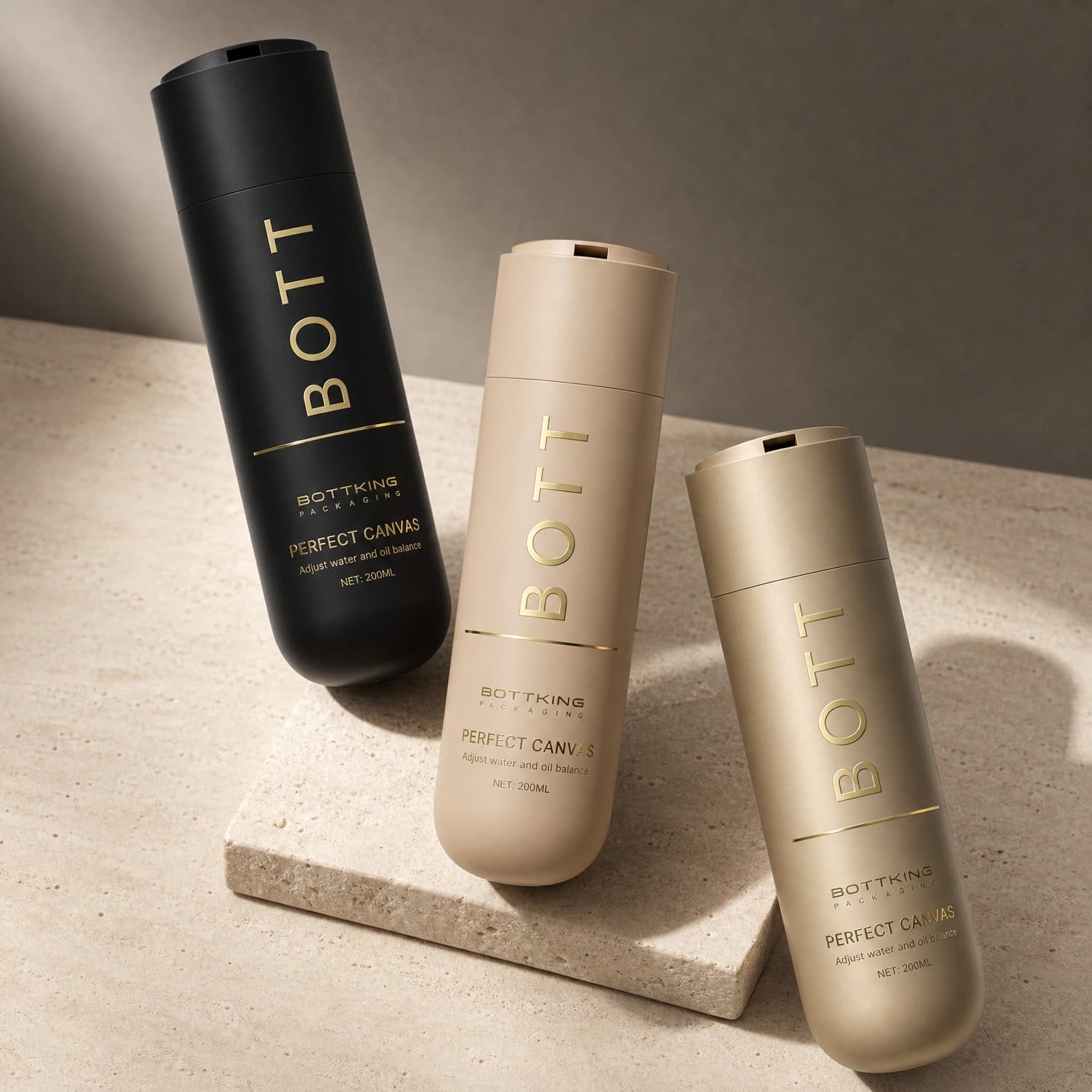
What is HDPE used for in cosmetics?
HDPE dominates cleanser, shampoo and body care bottles because it does all the practical jobs without needing help: it blocks light, resists surfactants and oils, holds a large volume with thin walls and costs less per gram than any alternative.
It is also the easiest plastic to supply with high recycled content. Post-consumer HDPE is collected at scale, and PCR HDPE is available with documented recycled percentages — which is why hair and body care brands usually start their recycled-content programme here.
| Property | Value |
|---|---|
| Density | 0.94–0.96 g/cm³ |
| Clarity | Opaque |
| Max service temperature | Around 70–90 °C depending on grade |
| Chemical resistance | Excellent to acids, alkalis, surfactants and many oils |
| Impact resistance | High, including at low temperatures |
| Recycling code | 2 (HDPE) |
| Flexibility | Rigid to semi-flexible depending on wall thickness |
Material characteristics
- Opaque, light-blocking material that protects photosensitive formulas
- High impact strength, including in cold conditions during transport
- Excellent resistance to surfactants, acids and many oils
- Moulds economically in large formats (500–1,000 ml and above)
- Smooth matte surface that accepts colour uniformly
- Widely available as certified post-consumer recycled resin
Applications
- Cleanser, body wash and shampoo bottles (200–1,000 ml)
- Body lotion bottles with pumps (250–500 ml)
- Large-format refill bottles and concentrate packs
- Wide-mouth jars for body butter and scrubs (100–250 ml)
- Hotel and amenity formats
- Mono-material recyclable bottle ranges with HDPE closures
Advantages
- Lowest cost per unit of the common cosmetic plastics at medium and large volumes
- Blocks light — no UV exposure for the formula and no transparency constraints on colour
- Tolerates the surfactant-rich formulas used in cleansers, shampoo and body wash
- Very high availability of PCR grades with documented recycled content
- Strong enough for thin walls, reducing pack weight per ml of product
- Good squeeze behaviour for lotion and wash formats in soft-touch grades
Limitations to plan for
- Not transparent — product colour cannot be merchandised through the pack
- Lower clarity options exist (LDPE blends) but at a cost to stiffness
- Can absorb fragrance and essential oil components over time
- Print quality on untreated HDPE can be lower than on PET; surface treatment may be needed
- Natural gloss is low, so a glossy look requires spray coating
Formula compatibility
- Surfactant formulas (shampoo, body wash, cleanser): excellent
- Low-pH formulas (AHA/BHA): good
- Oils and butter-based formulas: good, with extended soak test for high fragrance loads
- Alcohol-based formulas: good
- High-concentration fragrance or essential oils: caution — test for weight loss and panel deformation
- Powder and scrub products: good, with wall thickness sized for abrasion
Sustainability and end of life
- HDPE is code 2 and is one of the most widely collected and recycled plastics
- PCR HDPE is available from 25% to 100% recycled content with documented and certified percentages
- Mono-material HDPE bottles with HDPE caps sort reliably in existing streams
- Large formats plus thin walls keep material per ml low
- PCR HDPE hides colour variation that would be visible in clear or white packs, enabling higher recycled percentages
- Amber, black and dark colours reduce optical sorting efficiency — natural and light colours are preferable for high recycled content
Decoration options
- Custom colour across the full Pantone range (opaque)
- Screen printing with surface treatment where required
- UV digital printing for multi-variant runs
- Hot stamping on flat panels and closures
- Spray coating for gloss, matte or soft-touch finishes
- Wrap and front-and-back labelling, plus shrink sleeves
Suitable skincare products
- HDPE bottles
- Shampoo bottles
- Cleanser bottles
- Body lotion bottles
- Body care packaging
- Refill bottles
Why a brand should choose HDPE
- Choose HDPE when you need the lowest unit cost at volumes above 250 ml
- Choose HDPE when the formula is surfactant-rich or light-sensitive
- Choose HDPE when you want documented recycled content from a widely available PCR stream
- Choose PET or PP instead when transparency or heat resistance is the priority
Frequently asked questions
Is HDPE food-contact safe for cosmetic use?
Yes. Cosmetic and food-contact grades of HDPE are widely used; the grade and any colourants must be declared for the contact conditions. We supply resin declarations for the specific grade used in your order.
How much recycled content can HDPE take?
PCR HDPE is commercially available from around 25% up to 100% recycled content. Higher percentages can show a slightly warmer or greyer tone and a marginally softer surface, so physical sample approval is always required.
Can HDPE bottles be transparent?
No. HDPE is inherently opaque. If transparency is needed, use PET or PP, or a PP/HDPE blend in very thin walls which is still only translucent.
Why does HDPE sometimes smell?
Odour can come from the resin grade, colourant masterbatch, or from recycled content. Migration, weight loss and odour in the filled pack must always be checked for the product that matches your fragrance load, which takes an extended compatibility soak test.
Is HDPE suitable for a shampoo bottle?
Yes — HDPE is the standard material for shampoo because it resists surfactants, blocks light, moulds economically at 250–1,000 ml and is available with high recycled content.
Still have a question? Talk to a packaging expert.
Continue researching
HDPE packaging quotes and samples
Tell us the format, capacity, quantity and any recycled-content target and we will confirm which HDPE grade fits your formula, plus MOQ, sampling and lead time.
No account required · NDA available · Quote replies within one business day (Mon–Sat, GMT+8)