Skincare Packaging
Eye Cream Packaging
Eye cream packaging is a 5–20 ml format — airless pump bottle, small jar or applicator tube — chosen for precise dosing and hygienic application because the product is expensive per millilitre and applied near the eye.
- 5 ml
- 8 ml
- 10 ml
- 15 ml
- 20 ml
At a glance
- Best for
- Retinol eye treatments · Peptide and caffeine eye creams · Eye gel and serum formats
- Formula fit
- Eye cream · Eye gel · Retinol eye treatment
- Materials
- PP · PCR PP · Acrylic + PP inner cup
- Decoration
- Custom colour matched to the brand palette · Printing on body, lid and shoulder
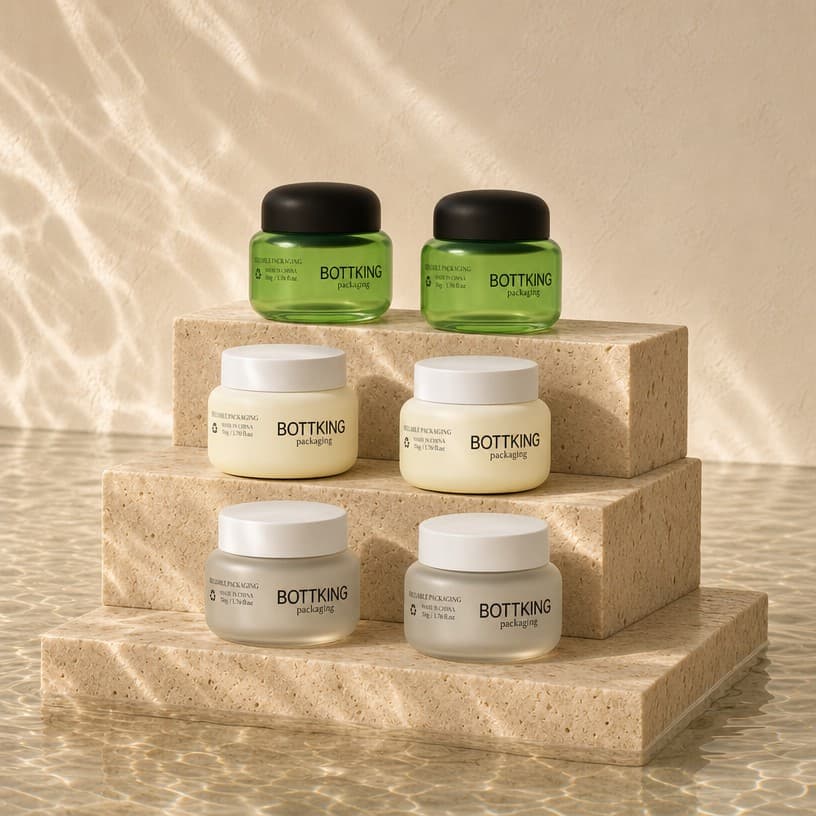
What are eye cream packaging?
Eye formulas are concentrated, often active-led and applied to delicate skin. That combination puts a premium on precise dosing, contamination control and clean dispensing, and it is why fine-tip airless pumps have become the default for premium eye products.
Jars remain common where a rich texture must be scooped or where the brand wants the lid as a design surface; in those cases a spatula or sealed inner lid improves hygiene.
Typical specification range
Values below are the ranges we quote most often. Confirm against your formula viscosity, fill weight and destination market before freezing a specification.
| Parameter | Options we quote |
|---|---|
| Capacities | 5 ml, 8 ml, 10 ml, 15 ml, 20 ml |
| Materials | PP, PCR PP, Acrylic + PP inner cup, PETG, SAN accents |
| Closures / dispensing | Airless pump with fine tip (0.10–0.20 ml), Jar lid with gasket, Spatula-applicator lid, Ceramic-tip applicator, Squeeze tip |
| Customisation | Custom colour matched to the brand palette, Printing on body, lid and shoulder, Hot stamping for premium retail packs, Frosted, soft-touch or metallic finishing, Secondary packing: cartons, inserts, shrink sleeve, Closure and component upgrades (airless, dropper, pump) |
| MOQ | 1,000 pcs per design for stock moulds; 3,000 pcs for decorated orders; 10,000 pcs per size for custom moulds. |
| Sampling time | Stock samples in 5–10 working days; custom colour and decorated samples in 10–20 working days. |
| Production lead time | 15–30 working days after sample approval, depending on quantity, decoration and assembly complexity. |
Product features
Small, precise dose
0.10–0.20 ml per stroke delivers the right amount for both eyes and prevents the waste that makes a 15 ml eye product disappear quickly.
Hygienic dispensing
Airless and sealed applicator designs remove finger contact, which supports preservative-reduced formulas and clinical positioning.
Applicator options
Fine tips, cold-touch ceramic applicators and jar spatulas can all be specified to reinforce the treatment story.
Who it is suitable for
- Retinol eye treatments
- Peptide and caffeine eye creams
- Eye gel and serum formats
- Clinical and aesthetic ranges
- Trial and travel eye formats
Suitable formulas and products
- Eye cream
- Eye gel
- Retinol eye treatment
- Caffeine serum
- Eye mask (larger format)
- Lash serum
Customisation options
Eye Cream Packaging can be delivered as a stock-mould pack with your colour and decoration, or developed into a proprietary format. Decoration is specified against the final surface finish so print adhesion and colour hold in use.
- Custom colour matched to the brand palette
- Printing on body, lid and shoulder
- Hot stamping for premium retail packs
- Frosted, soft-touch or metallic finishing
- Secondary packing: cartons, inserts, shrink sleeve
- Closure and component upgrades (airless, dropper, pump)
How these are manufactured
Parts are moulded by injection, injection blow or extrusion blow moulding depending on the format and material, then assembled, decorated and inspected in lots. Moulding parameters are recorded per mould so repeat orders match the approved sample. Read the manufacturing process.
Quality control
Dimension and weight checks, closure torque, leak and dose testing where relevant, colour verification (ΔE ≤ 1.5 opaque parts) and AQL 1.0/2.5 final inspection. Lot records are supplied with the shipping documents. See the inspection checklist.
Materials for this range
- PP — material guide
- Acrylic — material guide
- PCR plastic — material guide
Frequently asked questions
Answers to the questions buyers ask most about eye cream packaging. Send any specific question through the contact form and a packaging engineer will reply in writing.
What packaging is best for eye cream?
For retinol and other sensitive actives, a 15 ml airless pump bottle with a 0.10–0.20 ml dose is the best protection. For rich, stable textures, a 15 ml jar with a gasket and spatula works and gives more branding space.
How many uses does a 15 ml eye cream provide?
At 0.10 ml per use for both eyes, about 150 applications — roughly three to five months of daily use.
Do applicators affect formula compatibility?
Yes. Ceramic and metal applicators are inert and easy to clean; plastic applicators should be checked against the formula, and any coating must be tested for adhesion because it is in repeated contact with the formula.
What MOQ applies to eye cream packaging?
Small formats start at 1,000 pcs for stock moulds; airless and applicator formats typically start at 3,000 pcs.
What is the MOQ for eye cream packaging?
1,000 pcs per design for stock moulds; 3,000 pcs for decorated orders; 10,000 pcs per size for custom moulds.
Can I customise the colour?
Yes. Colour is matched to a Pantone reference or a physical sample and verified on production-resin parts. Custom colour matched to the brand palette is the standard route, and we supply samples for approval before the run.
Can you print or emboss my logo?
Yes — printing, hot stamping, coating, labelling and custom closures are all available for eye cream packaging. Choose the method with your surface finish in mind: gloss print or foil works best on matte and soft-touch surfaces.
Can I request samples?
Stock samples in 5–10 working days; custom colour and decorated samples in 10–20 working days. Stock samples are supplied free (up to five pieces per SKU, courier at your cost); custom colour and decorated samples are quoted per project, typically USD 120–450.
Can you develop a custom mould?
Yes. Custom tooling is quoted as a separate line item with the cavity plan stated, usually from around 10,000 pcs per size and 25–40 calendar days from drawing approval to first-article inspection.
What is the production lead time?
15–30 working days after sample approval, depending on quantity, decoration and assembly complexity.
Do you ship internationally?
Yes. We ship eye cream packaging to the United States, Canada, the UK, Europe, Australia, the Middle East, Southeast Asia, Japan, South Korea and Latin America, quoting FOB, CIF, DDP and air freight.
Which materials are available?
PP, PCR PP, Acrylic + PP inner cup, PETG, SAN accents. Selection is driven by formula compatibility, clarity requirements, decoration and any recycled-content target.
Still have a question? Talk to a packaging expert.
More in Skincare Packaging
Serum Packaging
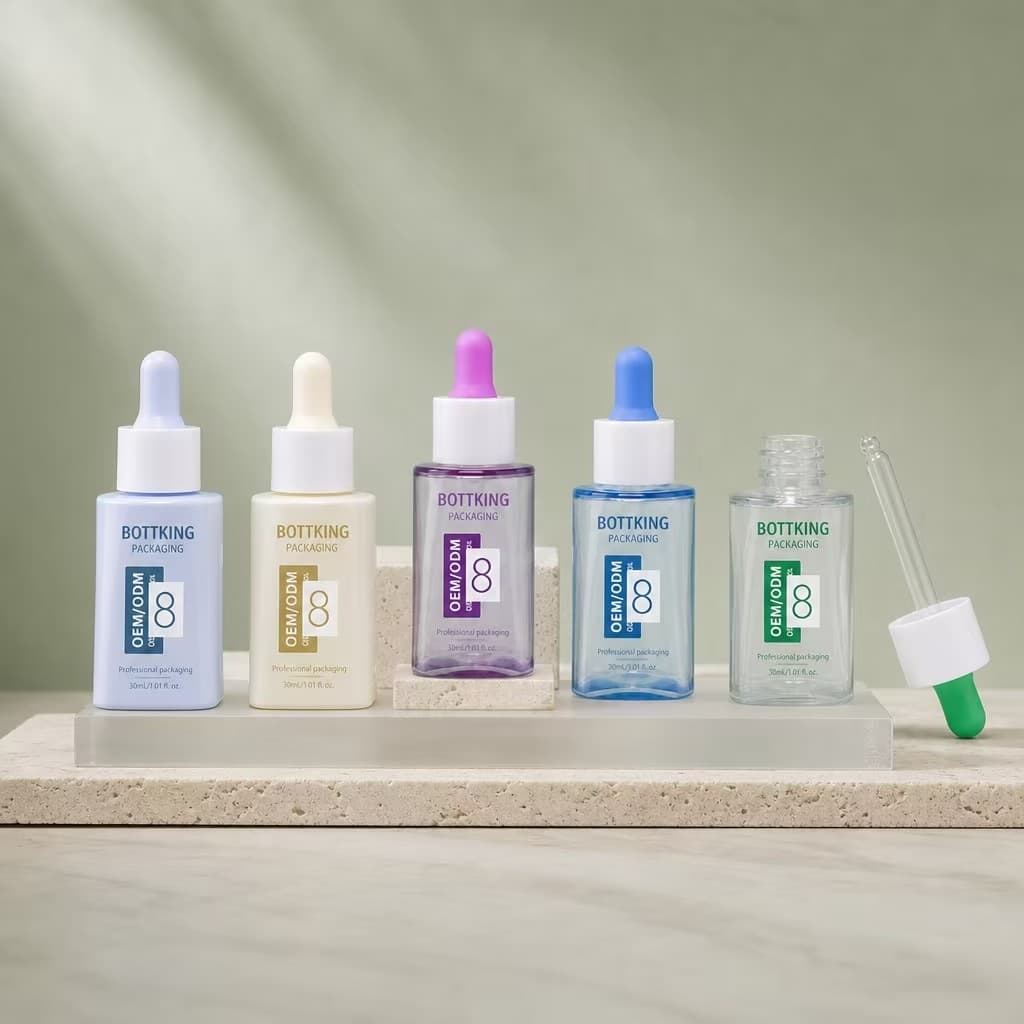
Serum packaging is usually a 15–50 ml dropper bottle, airless bottle or treatment pump bottle, and the right choice depends on how sensitive the active is to air and light rather than on aesthetics alone.
15 ml · 20 ml · 30 ml · 40 ml · more
View range →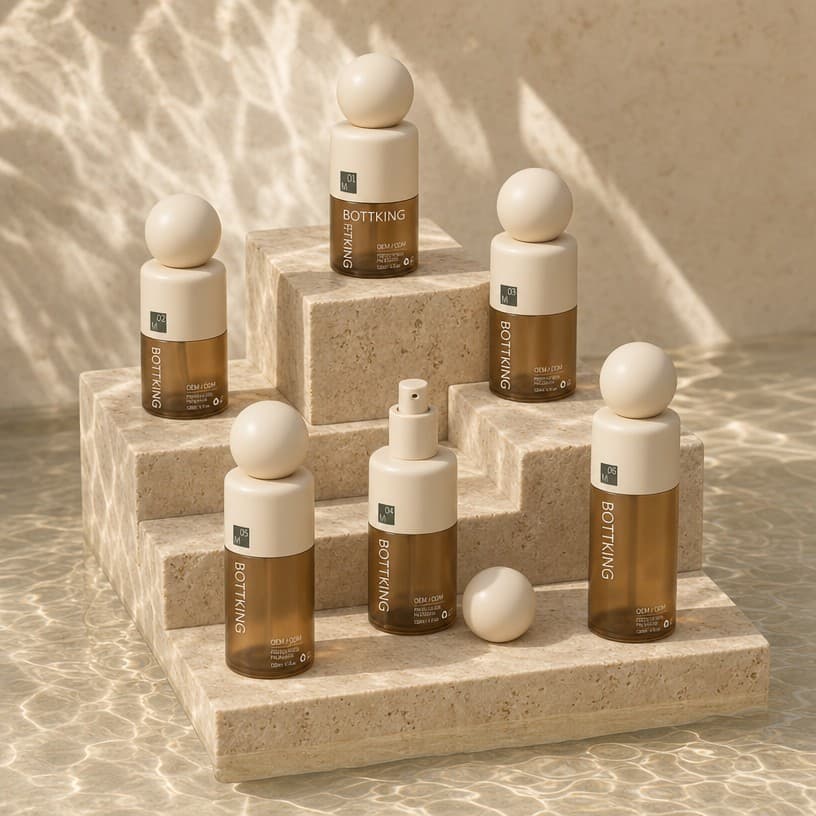
Moisturizer Packaging
Moisturizer packaging is decided by texture and preservation: thixotropic creams go into 30–60 ml jars, pumpable emulsions into 50–100 ml pump or airless bottles, and sensitive actives into airless jars.
15 ml · 30 ml · 50 ml · 60 ml · more
View range →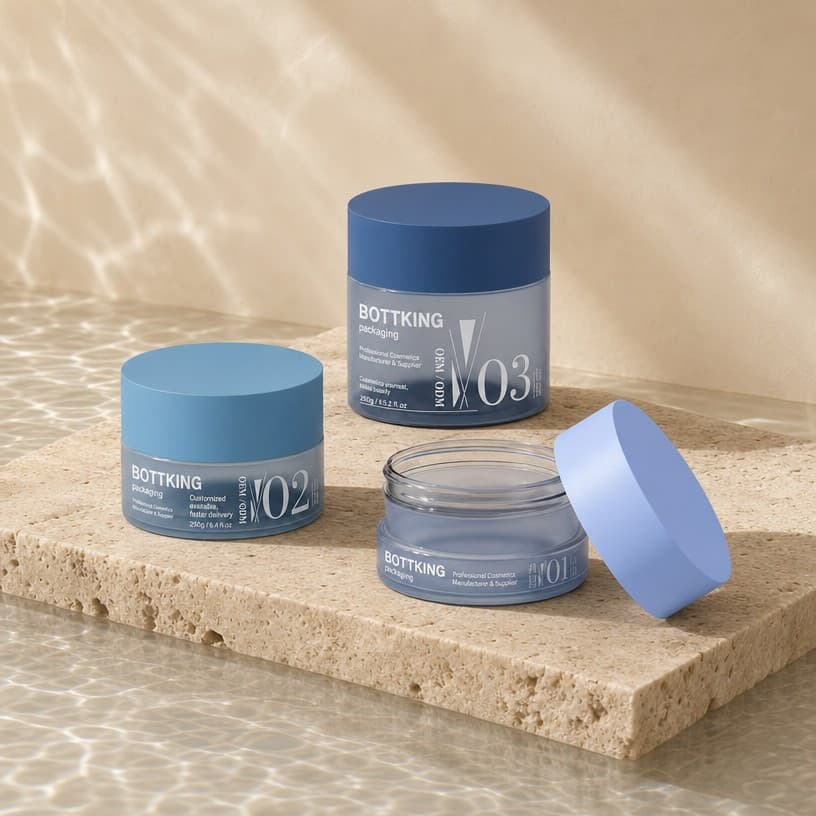
Face Cream Packaging
Face cream packaging is normally a 30–60 ml jar in PP, acrylic or airless construction, and the decision between them sets the perceived price point and the level of protection the formula receives.
15 ml · 30 ml · 50 ml · 60 ml · more
View range →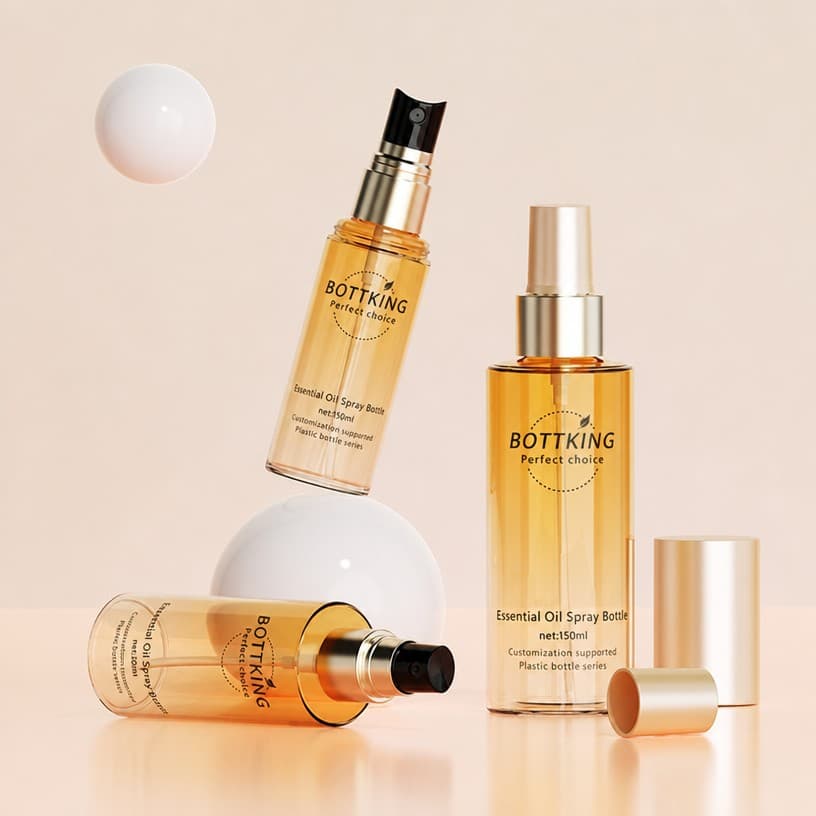
Cleanser Packaging
Cleanser packaging is usually a 100–500 ml HDPE or PET bottle with a flip-top cap, pump or foam pump, chosen for wet-hand handling and for cost efficiency because cleansers move in high volumes.
100 ml · 120 ml · 150 ml · 200 ml · more
View range →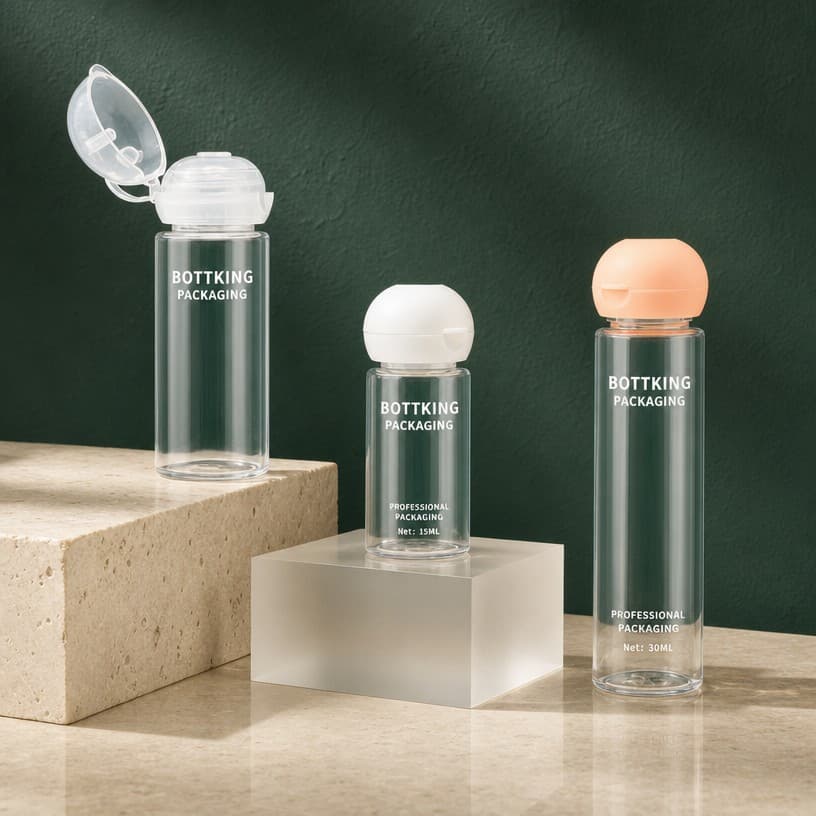
Toner Packaging
Toner packaging is a 100–500 ml PET or PP bottle with a disc-top cap, pump or fine-mist sprayer, and the material choice is driven by alcohol and acid content as much as by appearance.
50 ml · 100 ml · 120 ml · 150 ml · more
View range →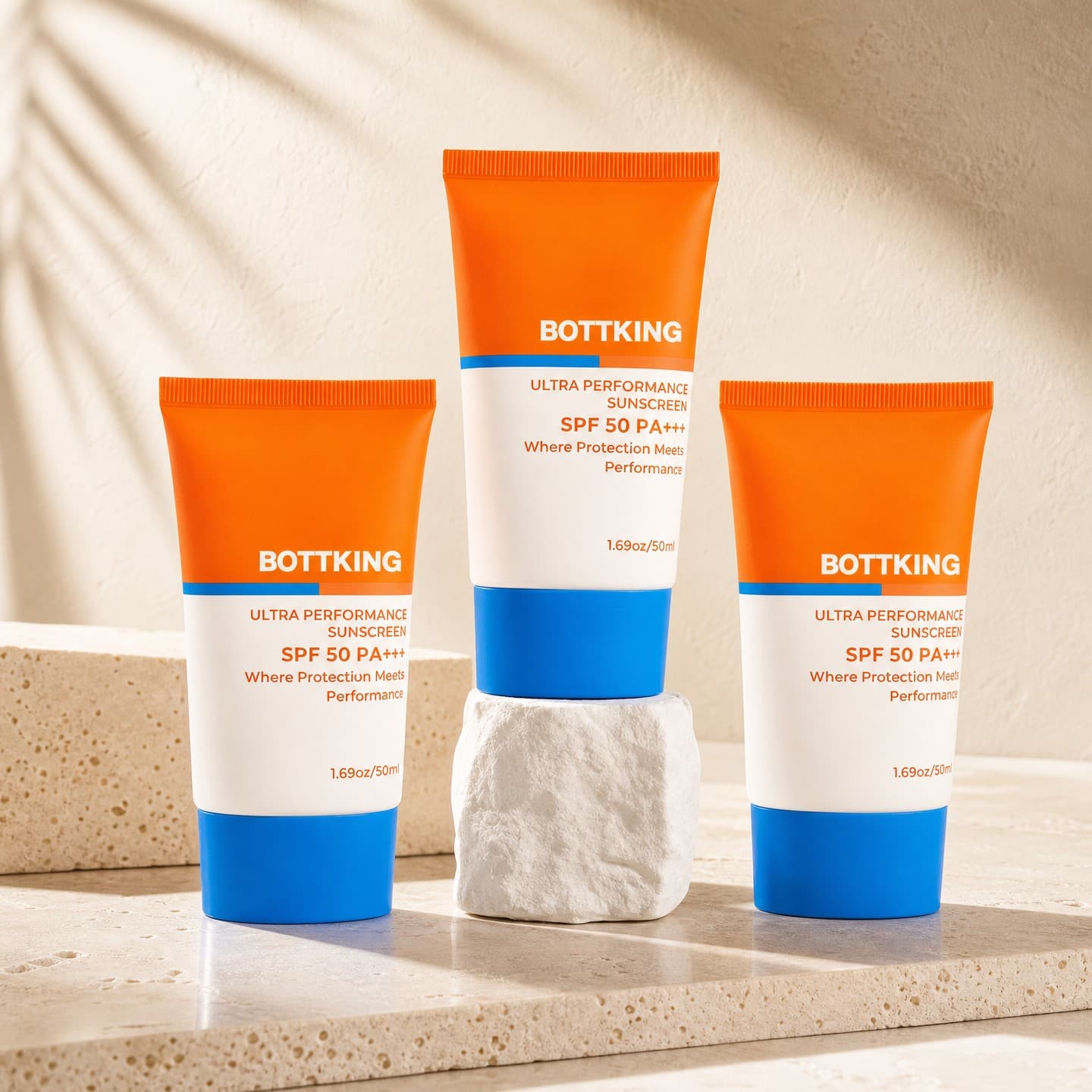
Sunscreen Packaging
Sunscreen packaging is usually a 50–200 ml tube, airless bottle or spray bottle, and the choice depends on where the product is applied, whether the SPF formula contains solvents or oils, and how dose-per-use accuracy affects SPF claims.
30 ml · 50 ml · 60 ml · 80 ml · more
View range →Continue researching
Quotes and samples for eye cream packaging
Send the capacity, quantity, colour reference and decoration you need. We reply with MOQ, unit price band, sampling time and lead time — and we will tell you if a different format suits your formula better. Stock mould formats from 1,000 pcs per design; decorated orders typically from 3,000 pcs; custom moulds usually from 10,000 pcs per size.
No account required · NDA available · Quote replies within one business day (Mon–Sat, GMT+8)